
As we honor Veteran’s Day today, let’s talk about women’s involvement in our founding and the Revolution. While researching women’s roles in the American Revolution for a historical novel, I became fascinated by primary sources showing young women working in trades or nurturing “expected” talents like needlework while family members discussed their futures. These moments capture a reality for countless colonial women—lives shaped by expectations, limited by law, yet filled with quiet resistance and remarkable agency.
The Legal Reality: Coverture and Women’s Rights
Women in American Revolution faced coverture, a legal doctrine where a married woman’s legal identity merged with her husband’s. Legal scholar William Blackstone wrote that “the very being or legal existence of the woman is suspended during the marriage.” Married women could not own property, make contracts, or control wages.
Yet historian Karin Wulf’s research in Not All Wives: Women of Colonial Philadelphia reveals the system was more complex than black-letter law suggested. Wulf argues that “unmarried women shaped the city as much as it shaped them.” Women arranged marriage settlements, conducted business as “feme sole” traders, and managed estates when husbands were absent. As Wulf notes, “The presence of unmarried women affected household arrangements, intense and emotional ties, and inheritance practices.”
When Duty Collided with Desire
Young women faced impossible choices. Marriages were arranged based on family connections, financial security, and social standing. Carol Berkin’s Revolutionary Mothers: Women in the Struggle for America’s Independence documents how the war disrupted these expectations.
Women “managed farms, plantations, and businesses while their men went into battle.” Yet Berkin notes the paradox: “Yet no matter how long her caretaking duties lasted, no matter how hard she labored in the fields…these actions did not blur the line between male and female.” Women’s contributions were often minimized within traditional gender roles.
Holly A. Mayer’s recent Women Waging War in the American Revolution (2022) brings together current scholarship examining women’s active participation across all social categories, emphasizing that creative activities often masked deeper longings for autonomy.
Women’s Agency During the Revolutionary War
The war years disrupted traditional gender roles. Cokie Roberts’ Founding Mothers: The Women Who Raised Our Nation chronicles how women organized boycotts, raised funds, managed businesses, and even engaged in espionage.
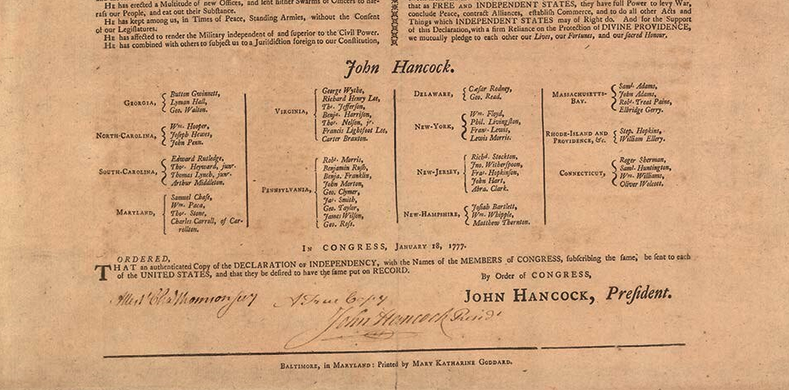
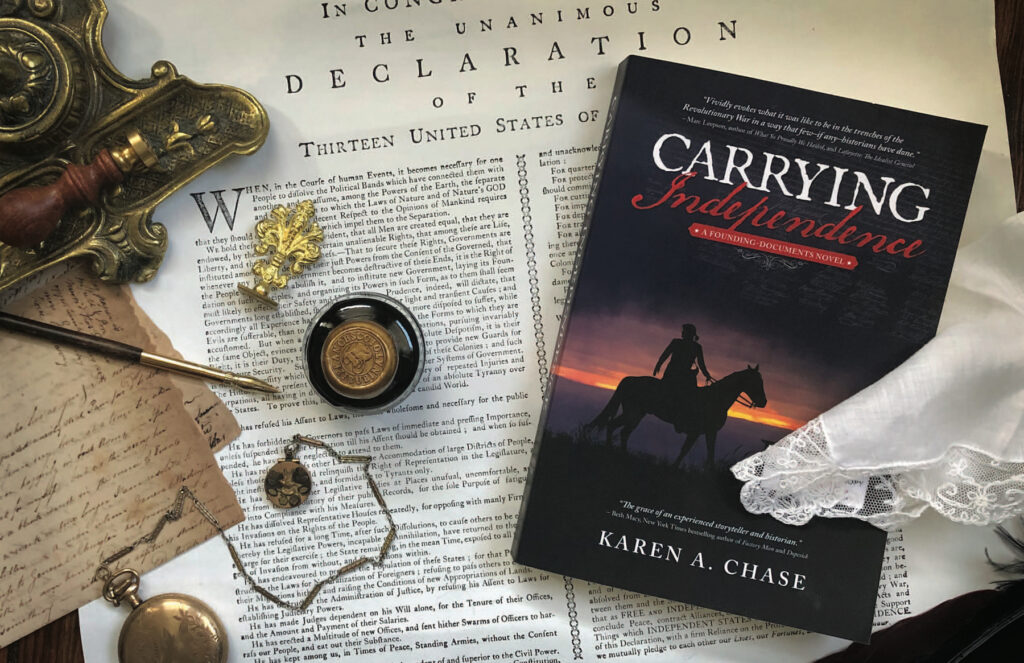
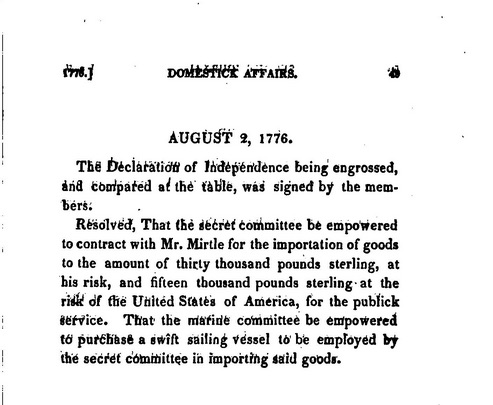
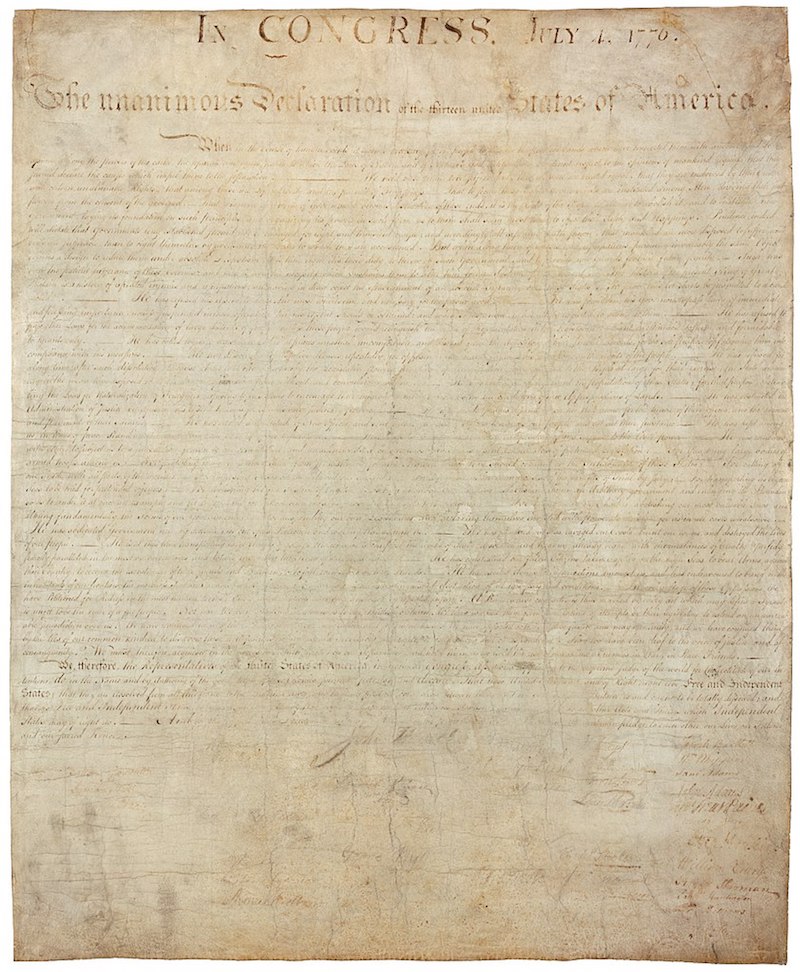
Consider Esther de Berdt Reed, who in 1780 penned “Sentiments of an American Woman” and organized the Ladies Association of Philadelphia. Reed led a door-to-door fundraising campaign that raised over $300,000 for Washington’s Continental Army—just weeks after giving birth to her sixth child. Or Mary Katharine Goddard, Baltimore’s postmaster from 1775-1789 and likely the nation’s first female federal employee. In January 1777, Goddard printed the first official copy of the Declaration of Independence bearing the signers’ names, typesetting her own name into history: “Baltimore, in Maryland: Printed by Mary Katharine Goddard.” (See image below.)
Berkin observed women transformed peacetime activities “into wartime activities, becoming the unofficial quartermaster corps of the Continental Army.” One British officer acknowledged: “If [we] had destroyed all the men in North America, we should have enough to do to conquer the women.”
These women demonstrated agency within restrictive legal frameworks. As one woman wrote during boycotts, “join with” in protest resolutions “implied independent decision making rarely displayed by ‘Ladies.'”
What Needlework Reveals
Needlework was one domain where colonial women could exercise creativity. Women used it to communicate—samplers included political slogans, mourning pieces commemorated loved ones, and coded messages hid in stitchery during the war. Working within acceptable feminine spheres, women found ways to influence outcomes. They couldn’t vote, but they refused to buy British tea. They couldn’t serve in legislatures, but they managed farms feeding Washington’s army.
The Personal Cost of Public Service
The Revolutionary War demanded sacrifices from women that history often overlooks. Women maintained households, protected children, and kept businesses solvent while managing wartime losses. Their service was essential, yet it brought no political rights. As Berkin writes: “The war for independence allowed, and often propelled, these women to step out of their traditional female roles for the briefest of moments…When the war ended, however, these women returned to their kitchens and parlors—and to the anonymity their society considered feminine.”
Lessons for Today
How do we recognize women’s agency when legal systems denied it existed? How do we properly credit contributions when records were kept in husbands’ names?
These questions matter as we approach America’s 250th anniversary. Accurate history requires acknowledging the full complexity of women’s lives—their constraints and their agency, their sacrifices and their resistance. Women in the American Revolution made choices, took risks, and shaped history—even when the law pretended they didn’t exist.
A Question Worth Pondering for lineage groups: Recognizing Women Patriots
This question of women’s agency has practical implications today for lineage organizations like the Daughters of the American Revolution. Current DAR guidelines state that when a married woman paid supply taxes or furnished aid to the revolutionary cause, patriot recognition goes to her husband because coverture law meant all property belonged to him.
This policy assumes women lacked agency—that they couldn’t make independent decisions about supporting the cause. Yet modern historians like Wulf, Berkin, and others have documented extensive evidence of women’s agency, even within coverture. Women ran businesses in husbands’ absence, made financial decisions, and actively chose to support the revolution.
For a women-centered organization, this presents a question worth pondering. If we recognize that women exercised real agency during the Revolutionary War—managing businesses, making political choices, and taking risks for the cause—should we reconsider how we grant patriot status to married women who demonstrably supported independence, even when legal documents bore only their husbands’ names?
Read the full novel, Carrying Independence, by purchasing an autographed copy. This deep dive focuses on chapter 17 of the novel, in which Susannah is stuck doing needlepoint while her mother outlines her future role as only a married woman. It sets the foundation for her ultimate growth through the freedom that war provided her—a time period in which she gained agency.
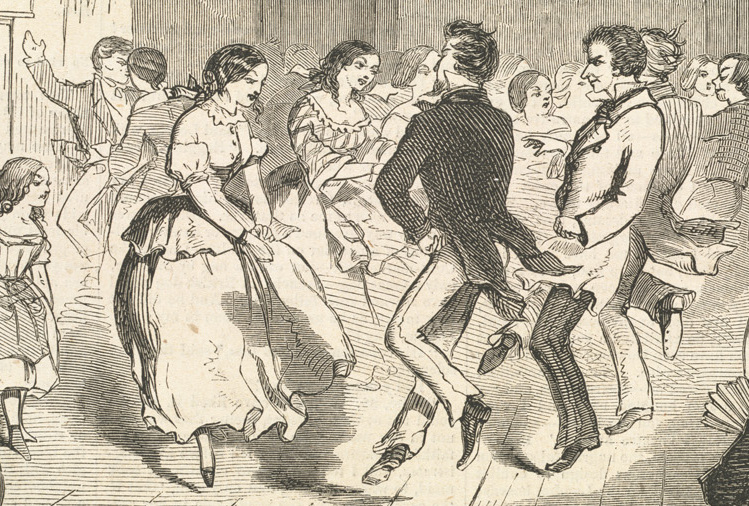 Imagine if your dating life depended entirely on how well you could navigate a complex series of steps while dozens of people watched your every move. Welcome to colonial courtship during the Revolutionary War, where the ballroom was both battlefield and proving ground for matters of the heart.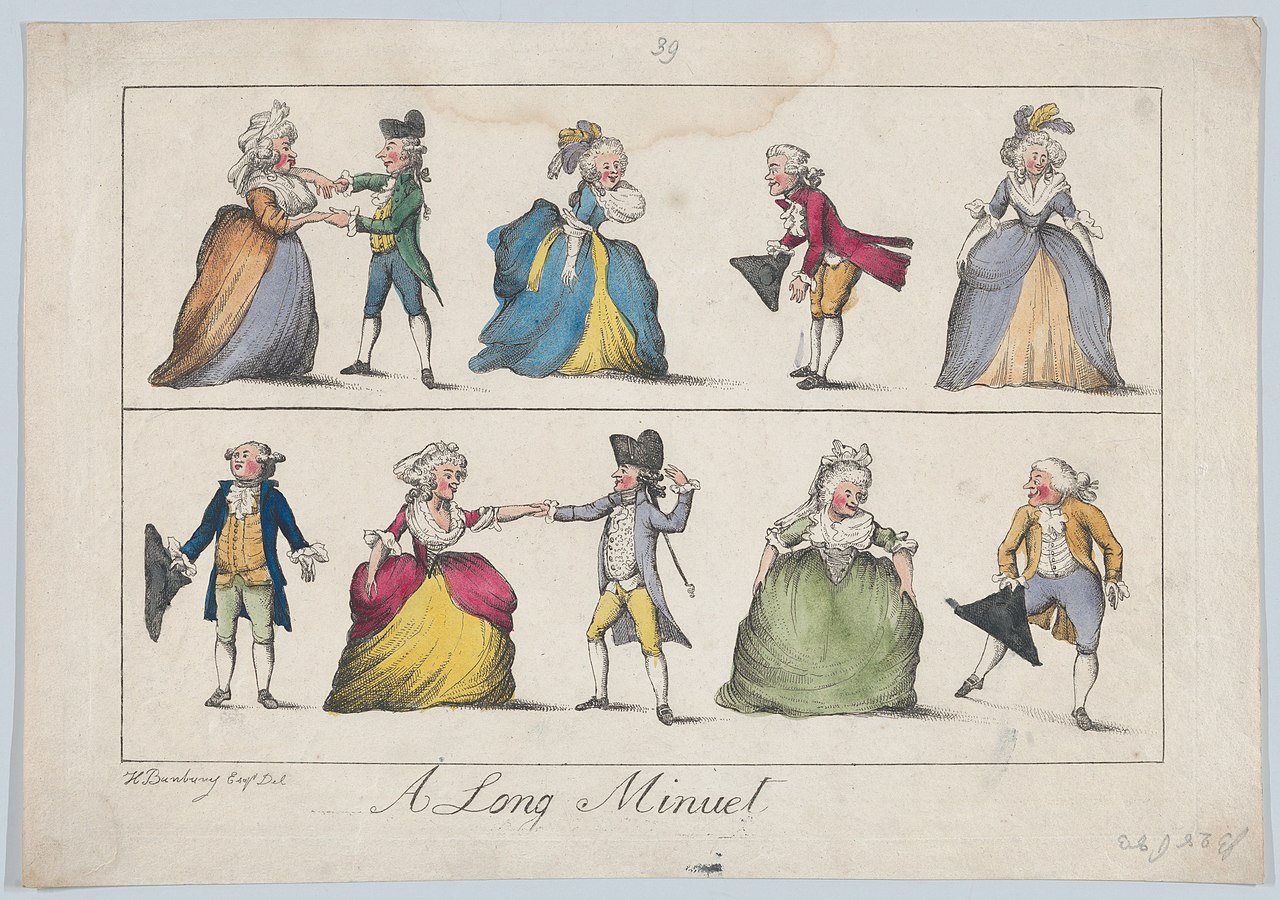
 I’m a Jane Austen fan, and so the dance scenes in Carrying Independence deliberately echo the romantic tension we see in Jane Austen’s novels and their film adaptations. Why? Austen understood that ballrooms were theaters of emotion—a place where glances, touches, and movements conveyed what words could not.





 The Sole Declaration of Independence