History

National Bill of Rights Day

In honor of National Bill of Rights Day (December 15), a guest post by historian and author Tony Williams.

James Madison and Bill of Rights Day

On June 8, 1789, during the First Congress, Representative James Madison arose on the floor of the House and made a speech introducing amendments that would come to be known as the Bill of Rights.
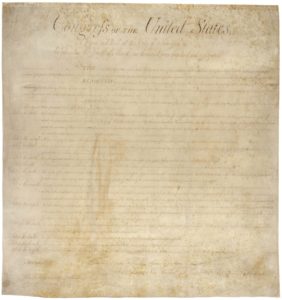
963px-Bill_of_Rights_Pg1of1_AC
Bill of Rights via the National Archives

Madison had previously thought the Bill of Rights was unnecessary.

And yet, during an exchange with Thomas Jefferson, Madison started to change his mind and admitted that a bill of rights could help the liberties become ingrained in the American character.

Madison began his June 8 speech by appealing to the spirit of compromise: “We ought not to disregard their inclination, but, on principles of amity and moderation, conform to their wishes, and expressly declare the great rights of mankind secured under this constitution.”

Madison teaches us a lesson about moderation.
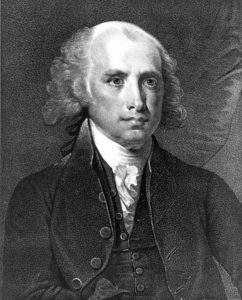
James_Madison_KarenAChase
James Madison Portrait via Library of Congress’s Prints and Photographs division, digital ID cph.3a53278.

“If we can make the constitution better in the opinion of those who are opposed to it, without weakening its frame, or abridging its usefulness, in the judgment of those who are attached to it, we act the part of wise and liberal men.”

Madison became the “Father of the Bill of Rights” as he skillfully guided the amendments through the Congress during the summer of 1789. Virginia became the last state to ratify on December 15, 1791.

This Bill of Rights Day affords Americans an opportunity to reflect on the basis of their rights and their form of government as well as the compromise and spirit of moderation that enabled them to protect their inalienable rights.

* * *

Tony Williams is Senior Teaching Fellow at the Bill of Rights Institute, and author of Washington and Hamilton: The Alliance that Forged America and Hamilton: An American Biography.  You can also follow him on Facebook.

. . . . . . . . . . . . . . . . . . . . . . . . . . . . . .

Thanks for sharing in the spirit of learning about our collective American History by subscribing to the blog. Guest posts like this one are welcomed and encouraged. Contact me for details.

For Karen-related author research tidbits, book news and events, subscribe to my e-publication, CHASING HISTORIES.
 

Posted in Blog | Comments Off on National Bill of Rights Day

Rice and Slavery in Colonial America

Not the Land o’ Cotton

A Guest Post by Susan Keogh

When most Americans think of the Old South, they envision the cotton plantations of Gone with the Wind or Roots. Most think cotton was all the South produced. They might also think of tobacco growing. But I would wager few outside South Carolina think of rice.

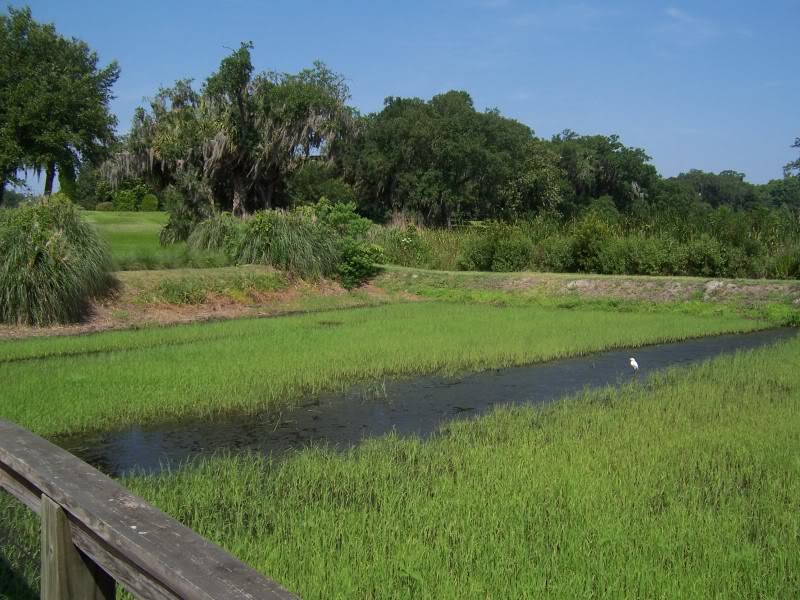
Rice_SusanKeogh
A demonstration rice field at Middleton Plantation in South Carolina, photo taken by Susan Koegh as part of her research.

How important was Rice in the Revolutionary South?

“Nowhere in the Americas did rice play such an important economic role as in South Carolina,” writes author Judith A. Carney in her book, Black Rice. “Rice and South Carolina share a history that led to the establishment of the crop early in its settlement… On the eve of the American Revolution… rice exports from South Carolina exceeded sixty million pounds annually.”

Who Introduced Rice to the Colonies?

To work the fields of this labor-intensive crop, English planters in Carolina used slaves brought from Africa. While some Colonists may have claimed credit for introducing rice to Carolina, the more likely source was the slaves who were born and raised along Africa’s Rice Coast and provided the knowledge of rice cultivation.

Carney writes: “About a hundred slaves accompanied the first settlers arriving in South Carolina from Barbados in 1670; within two years they formed one-fourth of the colony’s population, and by 1708 blacks outnumbered whites.”

* * *

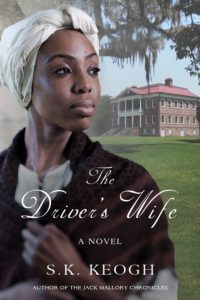
Driver'sWife_SusanKeogh_CoverSusan first published a series of novels centered around the adventures of Jack Mallory, a young Englishmen who is both pirate and eventually the patriarch of a large rice plantation in the colonial province of Carolina.
 

Her latest book, THE DRIVER’S WIFE, set in 17th Century South Carolina, is available now.  Follow her via: Facebook, Twitter, or on her blog.


. . . . . . . . . . . . . . . . . . . . . . . . . . . . . .

Thanks for sharing in the spirit of learning about our collective American History by subscribing to the blog. Guest posts like this one are welcomed and encouraged. Contact me for details.

For Karen-related author research tidbits, book news and events, subscribe to my e-publication, CHASING HISTORIES.


Posted in Blog | Comments Off on Rice and Slavery in Colonial America

Christian Di Spigna Reexamines History

The Generous Benedict Arnold

A Guest Post by Christian Di Spigna

To many Americans, the name Benedict Arnold is synonymous with treason and treachery. The former American patriot hero flipped sides and became a spy in the employ of the Crown. When Arnold’s betrayal was uncovered in 1780, it shocked and pained patriot sons and daughters of liberty.

Many historians have claimed that one of Arnold’s motivations for becoming a traitor was financial. Yet such a rationale betrays an incredible act of generosity that Arnold bestowed upon the young orphaned children of Dr. Joseph Warren, the martyred hero of the Bunker Hill battle.

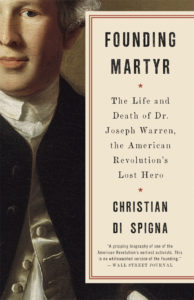
ChristianDiSpigna_FoundingMartyr_KarenAChase

Arnold and Warren had met briefly and befriended each other in the spring of 1775. Arnold’s wife died that June—the same month Warren was killed in action, leaving Arnold a widower with young children of his own.


A remarkable letter written by Warren’s fiancé, Mercy Scollay, to Benedict Arnold in July 1780 has uncovered the fact that Arnold had personally given nearly 3,000 pounds for the education and care of Warren’s orphaned children in the years since his battlefield death.

This kindness contradicts Arnold’s motivation of greed. It adds an additional layer to the many complexities surrounding the man. None of Dr. Joseph Warren’s patriot brethren—including future American governors and presidents—provided Warren’s children such financial support. Perhaps now, centuries later, Arnold’s historical lens needs some refocusing.

* * *

You can attend events with author and historian Christian Di Spigna (listing via his website) or connect via Twitter.  His newest book Founding Martyr is about Dr. Joseph Warren, an architect of the colonial rebellion, and a man who might have led the country as Washington or Jefferson did had he not been martyred at Bunker Hill in 1775. It’s available online, and at bookstores via IndieBound.

. . . . . . . . . . . . . . . . . . . . . . . . . . . . . .

Thanks for sharing in the spirit of learning about our collective American History by subscribing to the blog. Guest posts like this one are welcomed and encouraged. Contact me for details.

For Karen-related author research tidbits, book news and events, subscribe to my e-publication, CHASING HISTORIES.


Posted in Blog | Comments Off on Christian Di Spigna Reexamines History

Ancestry and the American Revolution

Genealogy and the Daughters of the American Revolution

Many of my friends––and even family––are surprised to find out that I am a DAR. After all, I’m Canadian! Yet, it’s true.

Three of my grandparents were from the United States, and on my mother’s side, I’ve fully traced my lineage back to Jacob G. Klock––a senator during the American Revolutionary War. The DAR database helped me find my ancestors, via all those who have joined the DAR from the Jacob Klock line.

NSDAR_FOundersScultpure_KarenAChase.JPG
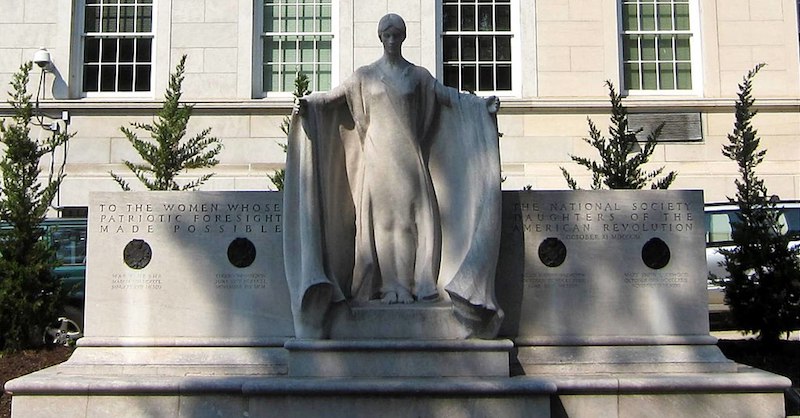
The Founders of the Daughters of the American Revolution, a 1929 marble sculpture by Gertrude Vanderbilt Whitney. It is located beside DAR Constitution Hall, headquarters for the Daughters of the American Revolution, in Washington, D.C.

Ancestry DNA plus the DAR

Many of us this holiday season, me included, are hoping to have our DNA tests done to help us further define our heritage. (Right now Ancestry.com has a holiday discount for gifting such tests.)

But DNA, and who we’re related to, is only part of our history. Understanding how or if our family’s contributed to who we’ve become as a nation is where the online database through the DAR comes in.

According to the DAR, “the DAR Genealogical Research System (GRS) includes free online databases containing information on Revolutionary patriot ancestors, descendants of those patriots, as well as the vast array of genealogical resources from the DAR Library.” You do not have to be a member to search the database.

Minority Revolutionary Patriots

The DAR is changing, for the better. More minorities––African Americans, Spanish, Native Americans, and others––are joining as a result of sources and initiatives the DAR helps provide. Advice and options for tracing minority patriots can be found here.

Have you had your DNA test done? Were you surprised by the results?

. . . . . . . . . . . . . . . . . . . . . . . . . . . . . .

Thanks for sharing in the spirit of learning about our collective American History by subscribing to the blog. Guest posts are welcomed and encouraged. Contact me for details.

For Karen-related author research tidbits, book news and events, subscribe to my e-publication, CHASING HISTORIES.

Posted in Blog | Comments Off on Ancestry and the American Revolution

Native American Storytellers

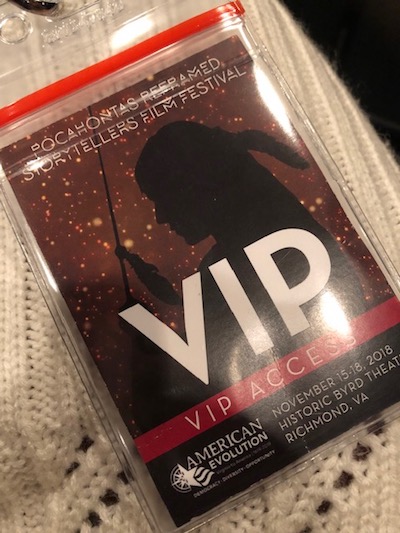
StorytellersFilmFest4_KarenAChase

November is National Native American History month. This past weekend was Richmond’s Native American Storytellers Film Festival, Pocahontas Reframed. As evidenced by the events and films showcased this weekend, the festival, “stems from a passion and desire for indigenous languages, cultures, and societies to thrive.”

Themes from the Storytellers Film Festival

From a film by Edward S. Curtis from 1914 that has been remastered, through shorts films, to full-length feature films––all focus was on sharing insights into the Indian experience (both past and present). A few themes stood out. A history shared is a history embraced. Storytelling is a human experience that we need to nurture, not suppress. All voices matter if we are to progress.

Enabling Authentic Storytelling

To help these themes become reality, it means empowering those who can tell their stories authentically. It means allowing room for other voices on the page, behind the camera, or at the microphone. It means providing funding. And education. Pamela Pierce, CEO of Silver Bullet Productions is doing all three. Her organization provides workshops for tribal students to teach them film-making, production, and storytelling. All the equipment––cameras, laptops, and more––are provided and then given to the students so they can then create using their voices.

As Adrian Baker states in his film INJUNUITY, “In a world searching for answers it is time we turned to Native wisdom for guidance.”

What Native wisdom or story guides you? Or do you seek more?

. . . . . . . . . . . . . . . . . . . . . . . . . . . . . .

Thanks for sharing in the spirit of learning about our collective American History by subscribing to the blog. Guest posts are welcomed and encouraged. Contact me for details.

For Karen-related author research tidbits, book news and events, subscribe to my e-publication, CHASING HISTORIES.

Posted in Blog | Comments Off on Native American Storytellers

Washington’s Rules of Civility, No. 7

A Case for Decent Behavior

Last week on COMPOSITIONS, guest Edward Lengel made a case for studying history with compassion. Equally important, is a call for a little more civility (not just politically). For this, too, we can look to our fore-bearers. In this case, George Washington.

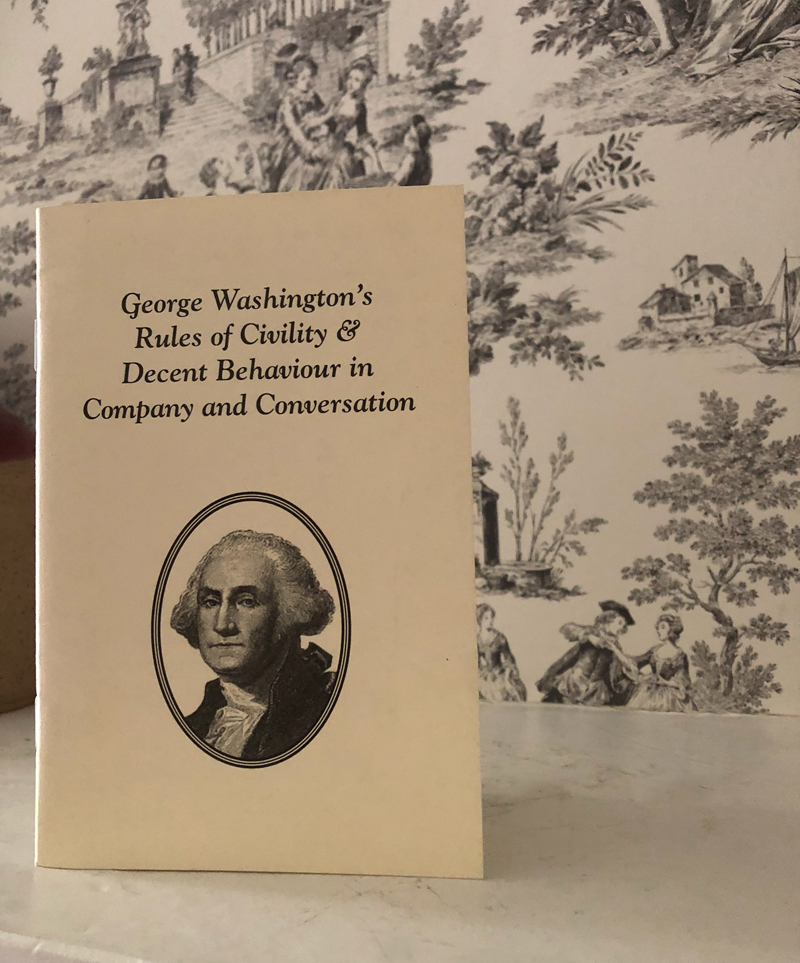
GWRulesofCivility_KarenAChase
My own little copy, in my own little room. It looks like Washington is giving the folks on that Toile wallpaper a disapproving look, n’est pas?

Washington’s Rules

Sometime before he was 16, Washington wrote 110 of these maxims by hand, transcribing them from a set created by French Jesuits in the 16th century. What should seem like common sense or simple courtesy for behaving in public––then and now––seems worth repeating. So, every now and then I will feature one of these helpful suggestions, in no particular order, for you to ponder and share. This one seems self-explanatory.


. . . . . . . . . . . . . . . . . . . . . . . . . . . . . .

Thanks for sharing in the spirit of learning about our collective American History by subscribing to the blog. Guest posts are welcomed and encouraged. Contact me for details.

For Karen-related author research tidbits, book news and events, subscribe to my e-publication, CHASING HISTORIES.

Posted in Blog | Comments Off on Washington’s Rules of Civility, No. 7

Edward Lengel on Compassion

The Compassionate Historian

A Guest Post by Edward Lengel

Compassion is the key to understanding history. Too often, readers and historians look on the past with a kind of arrogance, not just judging their forbears, but absolving themselves of the basic human flaws that have inspired the mistakes and tragedies of the past. We, of course, would never submit without protest to the kinds of misdeeds our ancestors committed. Or would we?

And, by setting our own humanity above our ancestors, don’t we also deny ourselves the chance of learning from their accomplishments?

A much better approach to history is to recognize, as the art historian Sir Kenneth Clark concluded in his great [1969] television series Civilisation, that “men haven’t changed much in the last two thousand years.” With this in mind, we can embrace the past and recognize in it the story of ourselves.

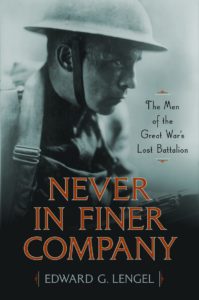
George Washington did not achieve victory in the Revolutionary War because he was better than human, but because he made the most of his humanity. The British mishandled the Irish Famine of 1846-52 not because they were exceptionally evil, but because they gave in to instinctive flaws, such as fear, that we also share. And the men and women who fought in and experienced the First World War, such as the four individuals I describe in my book Never in Finer Company, succumbed or overcame based upon the resources inside themselves.

. . . . . . . . . . . . . . . . . . . . . . . . . . . . . .

You can follow Edward Lengel, independent author and historian, via his blog, Facebook, or Twitter. He is currently Colonial Williamsburg’s Revolutionary in Residence. When not writing “cracking good stories,” he’s often hiking through history and giving tours and talks.

LENGEL_NeverInFinerCompany3-2-pdf   EdLengel_Photo2

. . . . . . . . . . . . . . . . . . . . . . . . . . . . . .

Thanks for sharing in the spirit of learning about our collective American History by subscribing to the blog. Guest posts like this one are welcomed and encouraged. Contact me for details.

For Karen-related author research tidbits, book news and events, subscribe to my e-publication, CHASING HISTORIES.


Posted in Blog | Comments Off on Edward Lengel on Compassion

Research & Writer’s Block

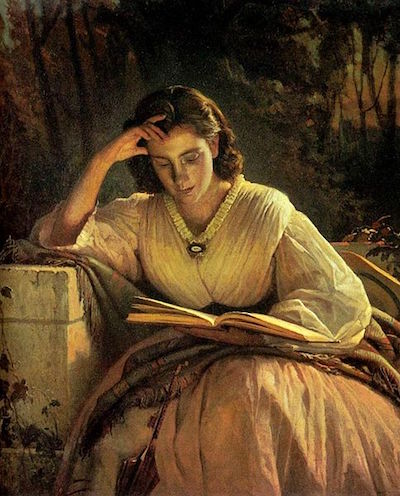
Writers block means going back to the books. (Public Domain Image: Ivan Kramskoy. Reading woman.)

Writers often dread the idea of becoming stuck, and Writer’s Digest (WD) has a great post this week about 5 Tips for Overcoming Writer’s Block.

I’ll admit that I’m not a big believer in writer’s block as this staring-at-a-blank-page, drink-in-hand, woe-to-the-tortured-Hemingway-like-writer syndrome. Much like the WD article author, Molly Cochran, I think the reasons for why writers might stall are pretty straightforward. And Molly’s tips are a great help for overcoming those problems.

But I will add to her list a sixth reason, and it’s primarily for all the historical novelists out there. Lack of preparation or research.

I write what I call “Factual Fiction,” whereby my plot, story and characters are not loosely set in history but intrinsically tied to real events, people and places. So if I am having difficulty with my plot, or what my characters are doing or saying, it’s because I simply don’t know enough about the event, person or place with which they must interact.

To overcome those moments when words come to a screeching halt, I read (or sometimes reread) about an event. I take out pictures of the locations I’m featuring, or I read second-hand accounts or bios about the person they’re speaking to. Once, I had to request a historian’s dissertation from a California university to overcome a lack of information.

Usually within an hour, or in that one case a couple weeks, I’m humming along with ideas again. No more writer’s block. Then my only problem becomes whether or not I’ve blocked off enough time to write.

How Time Flies

Hello again. Dipping back into my blog after a hiatus and after a new year begins, it’s clear to me how time can zoom by. You’re doing one thing (editing, in my case) and thinking, “After this, then I’ll get to that.”

This thinking is not mine alone, as witnessed on a holiday with my in-laws in New Jersey. Now in their mid-90s, my partner’s parents have been in the same house since 1959. Although some appliances or worn out chairs have been replaced, much of it has stayed true to the 60s. In part, because life was happening. Be it the morning newspaper or six kids, and thirteen grandchildren. They were so busy with this, that that (updating the house) just wasn’t the priority. And maybe it’s lovely it wasn’t.

While I’ll have more details on this excursion in my upcoming Will Travel For Words column over at ShelfPleasure, for now, enjoy these few snapshots of a circa 1960s house, and be thankful it hasn’t changed, so you can go back there, too.

Posted in Blog | Comments Off on How Time Flies

Lafayette’s Hermoine Close Up

Every now and then a little bit of history sails right into our lives. This last week, the Hermione landed in Yorktown, VA. The Hermione (pronounced Her-me-own) is a full-scale replica of a ship Lafayette sailed from France to America to fight with us during the Revolution.

While I’ll have more about my tour of the ship later this month in my Will Travel With Words Column on ShelfPleasure.com, for now enjoy this gallery of images: The Hermione Up Close.

The Hermione is currently sailing up the east coast to land in New York July 4th. To find out where the Hermoine will be, visit the Hermione2015 Website or for amazing photos visit their awesome Facebook page.


Posted in Blog | Comments Off on Lafayette’s Hermoine Close Up

© 2024 Karen A. Chase. Collection of data from this website is GDPR compliant, and any information you may have about data collection can be found in our privacy policy.